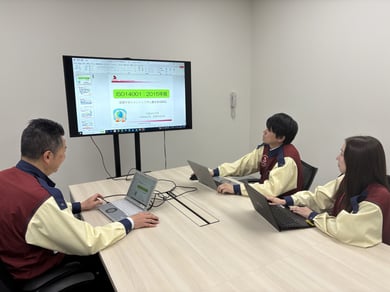
Basic Environmental Policy
We recognize that environmental conservation is one of the most pressing issues facing humanity. We promote environmental initiatives aimed at achieving harmony between our corporate activities and the conservation of the environment and biodiversity. Through our environmental initiatives, we actively contribute towards achieving the Sustainable Development Goals (SDGs).
- We promote continuous improvement and environmental protection by identifying and evaluating the environmental impacts of our development, production, sales and service activities, and by establishing and implementing environmental goals, targets and improvement plans.
- We comply with applicable environmental laws and regulations, as well as requirements related to chemical substances contained in our products, and other requirements to which we subscribe. We promote environmental protection activities within our technological and financial capabilities.
- As part of our corporate activities, we promote the following priority initiatives:
- (1) Promoting operational efficiency, waste reduction, and energy conservation through the effective use of resources
- (2) Reducing industrial waste and promoting the 3Rs (Reduce, Reuse, Recycle) through proper waste segregation
- (3) Providing eco-friendly products and services
- All employees receive environmental training to improve understanding of our environmental policies and raise awareness of environmental conservation.
- We ensure that our environmental policy is communicated to all employees and is made available to the public.
Governance
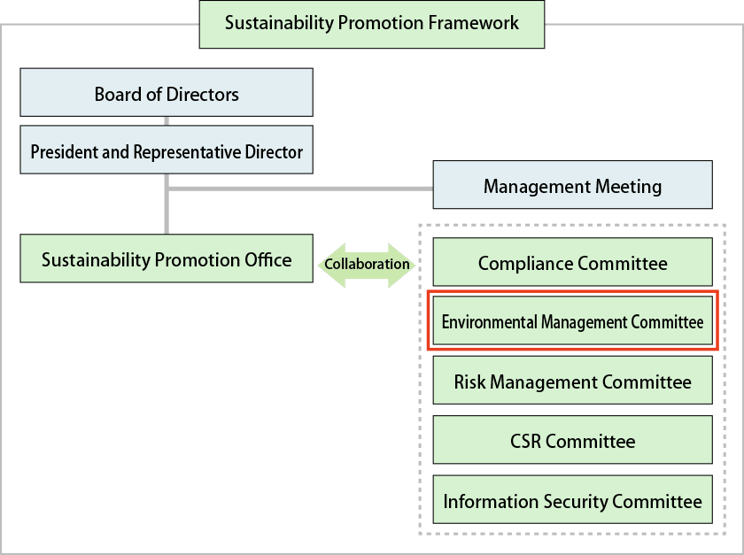
The Suzuki Group has established an environmental management system across the Group and promotes systematic environmental management activities by setting environmental targets aligned with its Basic Environmental Policy.
The Environmental Management Committee monitors progress toward environmental targets, shares the results of external and internal audits, disseminates environmental laws and regulations, and shares updates on environmental developments. The Committee conducts management reviews, and the results are reported to the Board of Directors on a quarterly basis.
Organizational Structure
Strategy
The Suzuki Group identifies key climate-related risks and opportunities that may affect its business by analyzing external and internal factors. The Environmental Management Committee analyzes and discusses risks and opportunities associated with environmental impacts, and identifies material risks and opportunities.
Taking into account changes in external and internal factors, we regularly analyze and evaluate risks and opportunities and proactively disclose relevant information.
Risk Management (Risks and Opportunities)
Risk
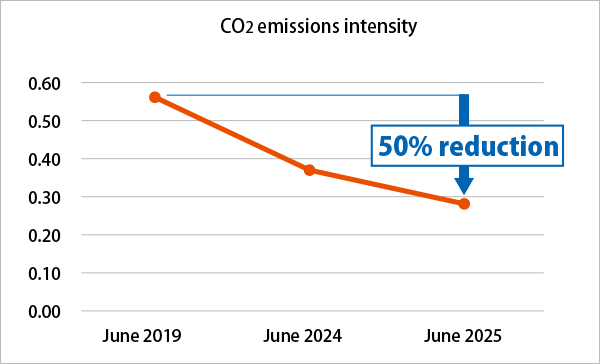
Compared with FY ending June 2019
-Transition to LED lighting
-Upgrade to energy-efficient chillers
-Replacement of gas-fired HVAC heat source equipment with electric systems
-Introduction of energy-saving systems for factory air conditioning
-Implementation of CO₂ visualization software
-Purchase of non-fossil fuel certificates
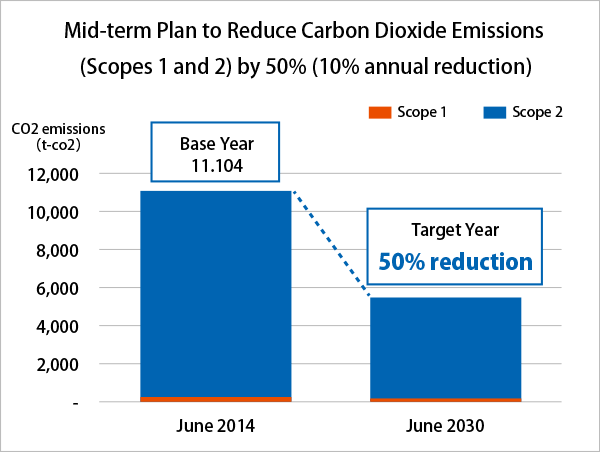
Compared with fiscal FY ending June 2014
-Transition to LED lighting
-Upgrade to energy-efficient chillers
-Replacement of gas-fired HVAC heat source equipment with electric systems
-Introduction of energy-saving systems for factory air conditioning
-Implementation of CO₂ visualization software
-Purchase of non-fossil fuel certificates
Initiatives to Reduce Greenhouse Gas Emissions
Ongoing energy efficiency activities
1)Air Leak Detection and Reduction
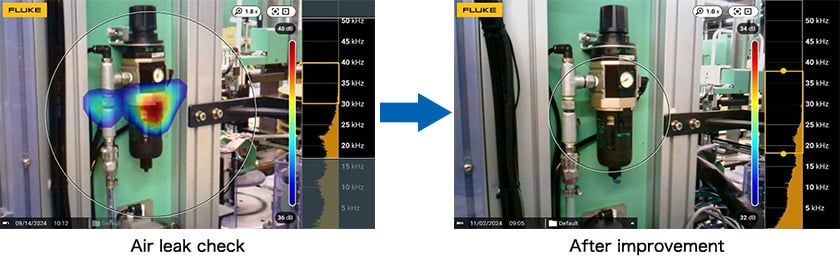
To enable early detection of air leaks, we have introduced an air leak detection device (Air Leak Viewer). Areas with higher sound pressure levels are displayed in red, making it easy to identify leakage points. The device also allows us to estimate flow rates, associated costs, and CO₂ emissions. We conduct regular inspections within our factories using this device to detect air leaks. As a result of air leak inspections for the FY ending June 2025, we achieved an annual reduction of 46.1 tons of CO₂ emissions.
2)Energy-Efficient Lighting
We are progressively transitioning to LED lighting. LEDs provide the same level of brightness as conventional lighting while consuming significantly less electricity. Additionally, due to their long lifespan (more than 20 times that of incandescent bulbs and more than three times that of fluorescent lamps), LEDs are expected to contribute to lower CO₂ emissions associated with manufacturing and distribution.
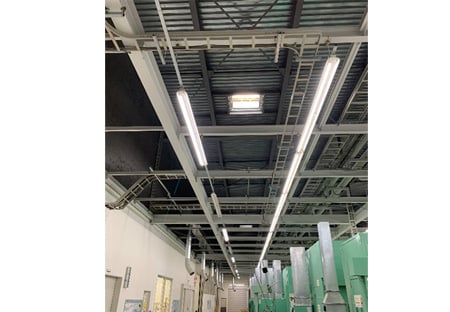
Transition from Fluorescent Lighting to LED Lighting (Hitakihara Plant)
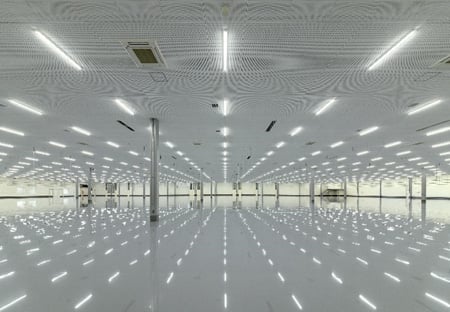
LED Lighting with an illuminance of 500 [lux] (Suzaka Inter Factory)
3)Energy Saver
The Energy Saver reduces standby power consumption (no-load losses) when transformers are not in use, such as during nighttime or extended holidays. For a 500 kVA transformer, the no-load loss is 487 W. Eliminating standby power consumption for 6 hours at night results in a reduction of 1,067 [kWh/year] and 0.479 [t/year] of CO₂ emissions per unit.
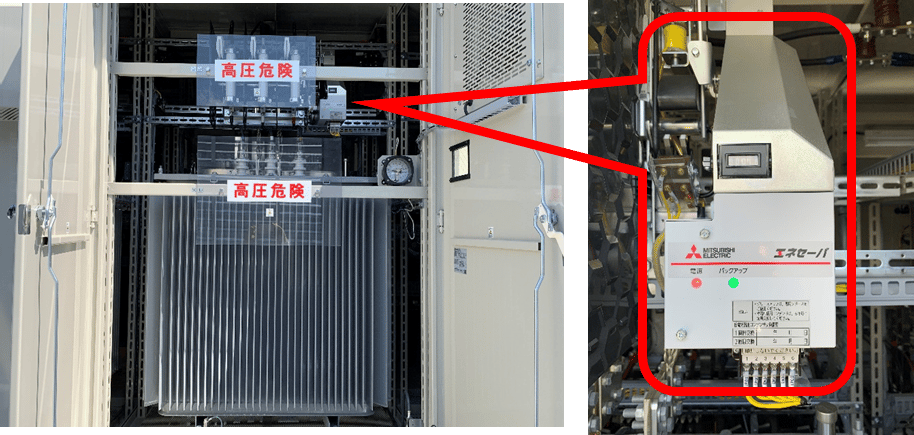
Energy Saver (Suzaka Interchange Plant)
4)Heat Source Equipment
We have upgraded to high-efficiency chillers. Following the upgrade (FY ending June 2022), annual CO₂ emissions were reduced to 700 tons, representing a 46% decrease compared with the pre-upgrade levels (FY ending June 2019).
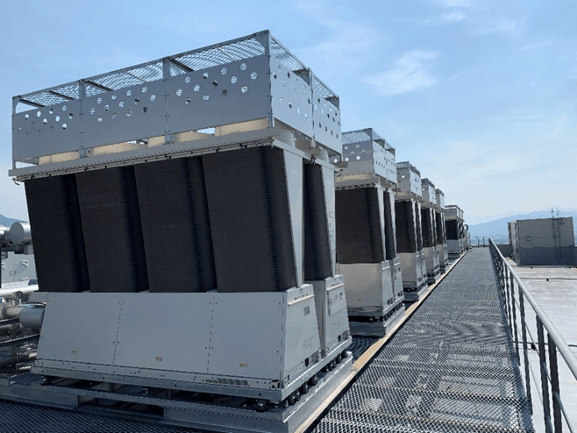
High-efficiency chillers (Hitakihara Plant)
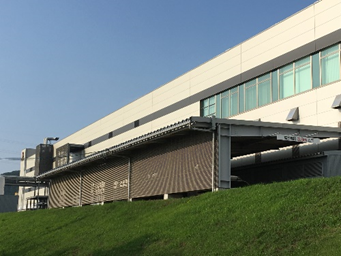
Solar panels installed on the canopy used for shading from the western sun at the compressor yard (Hitakihara Plant)
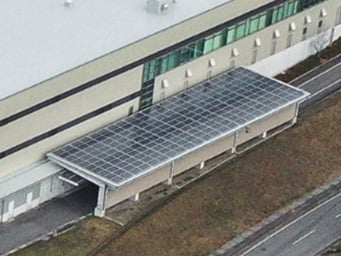
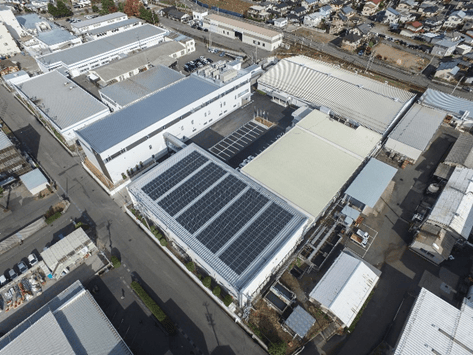
100 kW solar power system (Medical Assembly Plant)
The Suzuki Group submits all required notifications and filings related to applicable environmental laws and regulations at each of its plants and implements measures to ensure full compliance with such requirements.
In accordance with its environmental regulatory management standards, we regularly verify compliance status with applicable laws and regulations, as well as other requirements beyond legal obligations.
Compliance status is monitored through monthly environmental patrols, which monitor adherence to applicable laws and regulations in daily operations and strengthen oversight.
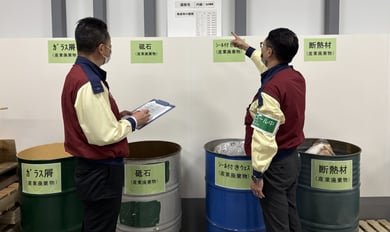
The Suzuki Group provides environmental education to ensure every employee understands the importance of environmental conservation activities and acts with awareness of their individual roles. We determine the necessary competencies for each site and conduct thematic training such as department-specific programs and new employee training to meet these requirements. Additionally, we provide specialized education and training to personnel engaged in operations that may have significant environmental impacts.
All employees receive regular environmental education through e-learning programs.